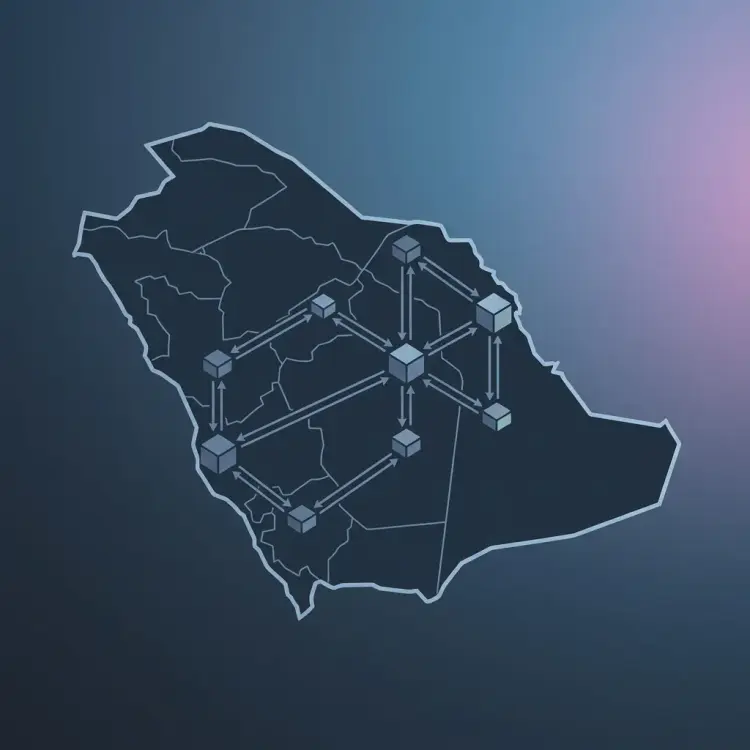


The formal enforcement of SAMA guidelines and the Saudi Arabia Personal Data Protection Law (PDPL) requires cloud architects to rethink data sovereignty. For a direct comparison of physical infrastructure options, read our analysis on AWS Riyadh vs. Local Private Clouds in KSA and explore our localized cloud native development services in Saudi Arabia.
1. Introduction: The Paradigm of Sovereign Hosting in KSA
In the wake of Saudi Arabia's Vision 2030, the Kingdom has undergone a rapid digital transformation, cementing its position as a primary hub for financial technology and enterprise SaaS. However, scaling a platform within this region requires more than just code deployment; it demands deep alignment with strict data sovereignty mandates. For technology leaders, the regulatory standards set by the Saudi Central Bank (SAMA) and the National Cybersecurity Authority (NCA) represent a non-negotiable operational boundary.
Achieving regulatory compliance in the financial and enterprise sectors in Saudi Arabia requires strict adherence to localized data sovereignty rules. In Saudi Arabia, the SAMA Cybersecurity Framework mandates that all consumer financial and critical operations data remain strictly resident within KSA. To achieve this without sacrificing platform scale, businesses must establish a sovereign cloud migration saudi arabia roadmap that guarantees compliance while enabling modern cloud performance.
This engineering-focused guide outlines the concrete database topologies, custom sharding strategies, network isolation controls, and cryptographic configurations required to build a compliant, resilient architecture within the Kingdom.
1. Introduction: The Paradigm of Sovereign Hosting in KSA
Historically, global SaaS providers relied on centralized hub regions—such as Ireland (eu-west-1) or Frankfurt (eu-central-1)—to serve their global client base, relying on cross-border data transfer to handle regional users. In the modern regulatory landscape, this approach is obsolete for Middle Eastern deployments. SAMA's rules establish a mandate: if your platform processes financial transactions, credits, debits, or banking data of Saudi citizens, the underlying hardware, networks, and databases must be situated inside the physical borders of Saudi Arabia.
Operating a sovereign architecture requires a fundamental change in system design. We must transition from centralized platforms to a distributed model where compliance is enforced at the network, database, and application layers. This ensures that while front-end routing can remain global, data processing and storage are strictly localized, eliminating the risk of data leakage outside the Kingdom's jurisdiction.
2. SAMA vs. KSA PDPL: A Decisive Compliance Breakdown
It is common for technical leaders to conflate the Saudi Central Bank (SAMA) Cybersecurity Framework with the broader KSA Personal Data Protection Law (PDPL). Understanding their distinct enforcement scopes, target entities, and specific constraints is critical to designing a compliant architecture.
SAMA Cybersecurity Framework: Established by the Saudi Central Bank, this framework applies specifically to financial institutions, banking entities, insurance agencies, credit bureau systems, and financial technology (Fintech) operators. SAMA regulations are highly prescriptive, dictating precise controls for network isolation, identity management, physical security, and auditing. SAMA considers data residency to be absolute: all transaction records, logs, and database backups must remain local.
KSA Personal Data Protection Law (PDPL): Supervised by the Saudi Data and AI Authority (SDAIA), PDPL is a horizontal regulation that governs the collection, processing, and transfer of Personal Identifiable Information (PII) across all business sectors. PDPL mandates user consent, data minimization, and strict security measures, with severe penalties for unauthorized cross-border transfers.
The table below summarizes the data classification categories and hosting limits enforced by KSA regulators:
| Data Class | Operational Content | SAMA Residency Rule | PDPL Transfer Limit |
|---|---|---|---|
| Tier 1: Public | Marketing collateral, product listings, general documentation. | Global hosting allowed; CDN caching allowed. | Unrestricted cross-border flow. |
| Tier 2: Operational Metadata | Anonymized telemetry, system performance logs, non-identifying errors. | Local KSA preferred; strict access logs required if global. | Allowed with security safeguards. |
| Tier 3: Confidential | Corporate internal communications, operational system configs, non-PII metrics. | Strictly localized KSA hosting required. | Requires local processing. |
| Tier 4: Restricted / Secret | Customer PII, transactional records, banking credentials, biometric files. | Absolute KSA localization; encryption key under local HSM. | Strictly prohibited from leaving KSA without explicit SDAIA exemption. |
3. Architecting a Data Sharding Proxy and Router
For platforms operating globally, hosting a separate, completely isolated infrastructure stack for each country can be operationally inefficient. The solution is to deploy a Data Sharding Proxy at the application's entry boundary. This proxy intercepts incoming REST, GraphQL, or gRPC payloads, detects the user's geographic residency, and dynamically routes the traffic to the appropriate database cluster.
In this architecture, the global frontend application serves as a routing layer, while the data persistence tier is strictly segregated. To ensure compliance, any database query involving a KSA citizen must be sharded and executed within KSA borders, as shown in the following system routing diagram:
[Global Edge Router]
       │
       ├──► Detect IP / Header: X-User-Country: KSA
       │          │
       │          ▼
       │  [Sovereign Sharding Proxy]
       │          │
       │          ├──► Route Payload to KSA VPC (me-central-2)
       │          │          └──► DB Write: Encrypted KSA PostgreSQL Cluster
       │          │
       │          ▼
       │  [Tokenization Gateway]
       │          │
       │          ▼ (Strip PII & Encrypt)
       │  [Global Sync Channel] ──► Global Analytics DB (Anonymized Metrics Only)
       │
       └──► Detect IP / Header: Other Regions
                  │
                  ▼
          [Global VPC (eu-west-1 / us-east-1)]
Below is a production-grade TypeScript middleware example for an Express or Nest.js application, demonstrating how a sharding proxy inspects headers and routes database connections to prevent compliance breaches:
import { Request, Response, NextFunction } from 'express';
import { getKsaConnection, getGlobalConnection } from './db/connections';

export interface ShardedRequest extends Request {
  dbConnection: any;
}

export const shardingProxyMiddleware = async (
  req: ShardedRequest,
  res: Response,
  next: NextFunction
) => {
  // Inspect geo headers added by the CDN or API gateway (e.g., Cloudflare or AWS CloudFront)
  const countryHeader = req.headers['x-user-country'] || req.headers['cloudfront-viewer-country'];
  const userLanguage = req.headers['accept-language'];

  const isKsaUser = countryHeader === 'SA' || (countryHeader === undefined && userLanguage?.includes('ar-sa'));

  try {
    if (isKsaUser) {
      // SAMA Compliance: Direct KSA citizen data strictly to me-central-2 database connection
      req.dbConnection = await getKsaConnection();
      req.headers['x-routed-region'] = 'me-central-2';
    } else {
      // Route international traffic to the default global database
      req.dbConnection = await getGlobalConnection();
      req.headers['x-routed-region'] = 'global';
    }
    next();
  } catch (error) {
    console.error('Database routing failure:', error);
    res.status(500).json({ error: 'Data routing constraint violation' });
  }
};
4. Local Database Replication Topologies inside Saudi Arabia
When database servers are hosted inside Saudi Arabia, they must be configured for high availability (HA) and disaster recovery (DR) without relying on global regions. If a database failure occurs, failing over to a server in Frankfurt or Ireland is a SAMA compliance breach.
The solution is to design **Multi-Availability Zone (Multi-AZ) database topologies** within the boundaries of KSA. The AWS Riyadh region (me-central-2) provides three distinct AZs. You must configure an active-passive replication model where databases stream data synchronously within KSA boundaries, ensuring local recovery.
To implement this in PostgreSQL, write the following configuration settings into your postgresql.conf file to enforce synchronous replication within the local cluster:
# PostgreSQL Local KSA Replication Configurations
wal_level = replica
max_wal_senders = 10
archive_mode = on
archive_command = 'test ! -f /var/lib/postgresql/data/archive/%f && cp %p /var/lib/postgresql/data/archive/%f'

# Synchronous replication parameters to prevent data loss
synchronous_commit = on
# Forces transaction confirmation from at least one standby node in me-central-2a/b before commit success
synchronous_standby_names = 'FIRST 1 (ksa_replica_az1, ksa_replica_az2)'
5. Infrastructure as Code: Provisioning a SAMA VPC in Terraform
To satisfy audits, SAMA compliance must be built directly into your Infrastructure as Code (IaC). This allows you to verify that database subnets are isolated and cannot be accessed directly from the public internet.
Below is a production-ready Terraform snippet that provisions a SAMA-compliant network topology in me-central-2 (Riyadh). It creates isolated private subnets, a database security group that blocks direct external access, and public subnets routed exclusively through an internet gateway for public API endpoints:
# SAMA-Compliant VPC Topology for me-central-2 (Saudi Arabia)
provider "aws" {
  region = "me-central-2" # Riyadh
}

resource "aws_vpc" "sama_vpc" {
  cidr_block           = "10.100.0.0/16"
  enable_dns_hostnames = true
  enable_dns_support   = true

  tags = {
    Name        = "SAMA-Compliant-VPC"
    Compliance  = "SAMA-Cybersecurity-Framework"
    Environment = "Production"
  }
}

# Isolated Private Subnet for Database Storage
resource "aws_subnet" "database_subnet_a" {
  vpc_id            = aws_vpc.sama_vpc.id
  cidr_block        = "10.100.3.0/24"
  availability_zone = "me-central-2a"

  tags = {
    Name = "KSA-DB-Private-Subnet-A"
    Type = "Private-Data"
  }
}

resource "aws_subnet" "database_subnet_b" {
  vpc_id            = aws_vpc.sama_vpc.id
  cidr_block        = "10.100.4.0/24"
  availability_zone = "me-central-2b"

  tags = {
    Name = "KSA-DB-Private-Subnet-B"
    Type = "Private-Data"
  }
}

# Network Access Control List (NACL) blocking egress outside the KSA subnet borders
resource "aws_network_acl" "database_nacl" {
  vpc_id     = aws_vpc.sama_vpc.id
  subnet_ids = [aws_subnet.database_subnet_a.id, aws_subnet.database_subnet_b.id]

  # Allow inbound DB traffic from Application Server subnets only
  ingress {
    protocol   = "tcp"
    rule_no    = 100
    action     = "allow"
    cidr_block = "10.100.1.0/24" # Application Subnet A
    from_port  = 5432
    to_port    = 5432
  }

  # Block all external internet routing
  egress {
    protocol   = "-1"
    rule_no    = 200
    action     = "deny"
    cidr_block = "0.0.0.0/0"
    from_port  = 0
    to_port    = 0
  }

  tags = {
    Name = "SAMA-Database-NACL-Guard"
  }
}
6. Cryptographic Controls and KMS Key Sovereignty
Data residency alone is insufficient if the cryptographic keys used to decrypt the databases are hosted in global regions. If keys are managed outside Saudi Arabia, global administrators could decrypt database assets remotely, creating a compliance vulnerability.
To prevent this, you must configure **Key Management Services (KMS)** using customer-managed keys (CMK) stored inside localized Hardware Security Modules (HSMs) inside the KSA VPC. SAMA guidelines state that the customer must maintain absolute custody of decryption keys, and the hosting provider must have no ability to decrypt the datasets.
To implement column-level encryption in a PostgreSQL database for sensitive consumer data (such as national ID or credit card details), configure the database to use the pgcrypto extension for encryption-at-rest:
-- Enable pgcrypto extension for encryption-at-rest
CREATE EXTENSION IF NOT EXISTS pgcrypto;

-- Create table with encrypted PII columns
CREATE TABLE ksa_users_encrypted (
    user_id SERIAL PRIMARY KEY,
    username VARCHAR(100) NOT NULL,
    -- Store national ID as encrypted bytea type
    national_id_encrypted BYTEA NOT NULL,
    created_at TIMESTAMP DEFAULT CURRENT_TIMESTAMP
);

-- Insert statement demonstrating pgp_sym_encrypt with a local KMS key
INSERT INTO ksa_users_encrypted (username, national_id_encrypted)
VALUES (
    'ahmed_al_malki',
    pgp_sym_encrypt('1029384756', 'KSA-Local-KMS-Decryption-Key-99882341')
);

-- Query to decrypt database records, limited to authorized sessions
SELECT
    username,
    pgp_sym_decrypt(national_id_encrypted, 'KSA-Local-KMS-Decryption-Key-99882341') AS decrypted_national_id
FROM ksa_users_encrypted
WHERE username = 'ahmed_al_malki';
7. SAMA Cybersecurity Framework Audit Readiness Checklists
Preparing for SAMA compliance audits requires systematic documentation of your security controls. Auditors look for architectural evidence showing that compliance is enforced rather than just documented.
Maintain the following checklist to ensure your cloud environments remain audit-ready:
- Infrastructure Isolation: Prove that all database and cache instances reside in private subnets with no internet gateway routes.
- Key Custody: Provide HSM logs showing that customer-managed keys are rotated every 90 days and accessed only by localized services.
- Audit Logging: Maintain immutable logs of database access, console logins, and infrastructure changes (e.g., using AWS CloudTrail and pgAudit) with log files stored in a write-once, read-many (WORM) storage bucket inside KSA borders.
- Disaster Recovery: Document successful multi-AZ database failover testing conducted within the Riyadh region within the last six months.
- Data Minimization: Prove that non-production environments contain only synthetic mock data, and that all real production datasets are encrypted.
8. Conclusion and Strategic Action Plan
Building for SAMA compliance is not about adding security settings to a global platform; it is about designing a regional infrastructure stack from the ground up. By using sharding proxies, Multi-AZ databases inside KSA, localized KMS key management, and isolated VPC networks, you can build a highly resilient architecture that satisfies the Kingdom's strict compliance standards.
Establishing a solid sovereign cloud migration saudi arabia strategy allows your business to enter the Saudi market confidently, ensuring compliant operations while enabling high-performance cloud architectures.