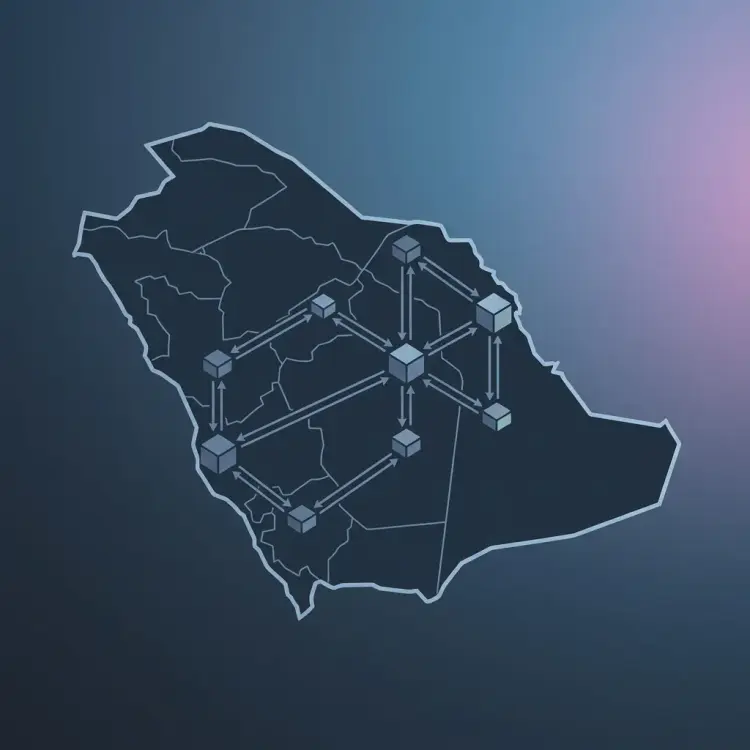

Infrastructure planning for enterprises in Saudi Arabia has changed dramatically with the launch of localized global cloud regions. When evaluating your sovereign cloud migration saudi arabia strategy, the debate between local private clouds and global hyper-scalers like the AWS Riyadh region is top of mind for CTOs looking for both scalability and SAMA/NCA compliance. Explore our core DevOps and Cloud Services for tailored enterprise cloud architecture guidance.
Deciding where to host production workloads is a critical decision for technology leaders. This guide evaluates latency profiles, service availability, compliance controls, security isolation, and cost structures to help you select the right infrastructure path.
1. The Sovereign Infrastructure Landscape in Saudi Arabia
For years, Saudi companies had to choose between on-premises servers or local private data centers. While local providers satisfied data residency guidelines, they lacked the API flexibility, serverless capabilities, and automation tools of global clouds, which slowed development velocity. For multi-tenant platform isolation, read our breakdown of scaling multi-tenant SaaS on Kubernetes.
The introduction of the AWS Riyadh region (me-central-2) has changed this, offering local data residency alongside the full AWS ecosystem, allowing teams to build modern cloud architectures locally.
CTOs must now balance the benefits of global public cloud providers with the localized capabilities of Saudi national operators. This decision impacts not only application performance and cost, but also alignment with the National Cybersecurity Authority (NCA) guidelines and SAMA directives.
2. AWS Riyadh Region (me-central-2) Under the Microscope
The AWS Riyadh region (me-central-2) is built on three distinct Availability Zones (AZs). Each AZ is physically isolated from the others, situated in different geographic locations around Riyadh. This physical separation is critical for disaster recovery, ensuring that local events like power outages do not affect the entire region.
AWS Riyadh supports core services like EC2, EKS, RDS, DynamoDB, Lambda, and KMS, enabling containerized architectures and automated scaling directly inside the Kingdom. This allows engineering teams to deploy cloud-native architectures locally, using the same tooling they use globally.
One limitation is that advanced machine learning services (like Amazon Bedrock or SageMaker) are often rolled out in phases. CTOs must evaluate whether their required services are supported locally, or plan hybrid architectures to access global services securely.
3. Local KSA Private Cloud Providers: stc, Mobily, and Zain
Local telecommunications giants like stc, Mobily, and Zain have developed cloud offerings tailored for Saudi enterprise and government workloads. These private clouds operate out of physical data centers situated in major hubs like Riyadh, Jeddah, and Dammam.
stc Cloud: As the national telecom leader, stc has invested heavily in sovereign data centers. Their cloud offerings include managed virtualization, backup, disaster recovery, and integration with national identity systems (Nafath). stc Cloud is particularly well-suited for government contracts and large enterprises requiring localized support.
Mobily Cloud: Partnering with global technology providers like VMware and Virtustream, Mobily offers enterprise-grade virtualization, private networking, and managed database services, with billing denominated in Saudi Riyals (SAR).
Zain Cloud: Focuses on agile, developer-friendly virtualization, container hosting, and edge networking, offering competitive pricing for mid-market enterprises and startups.
4. Performance Diagnostics: Latency, Throughput, and Jitter
For real-time applications like financial trading or high-volume API gateways, latency is a critical performance metric. Routing traffic to distant regions like Bahrain or Ireland can introduce significant lag.
AWS Riyadh delivers low-latency networking, with sub-10ms roundtrip times for users in Riyadh. The table below compares latency profiles, security controls, and support parameters between AWS Riyadh and local KSA private clouds:
| Operational Metric | AWS Riyadh (me-central-2) | KSA Private Clouds (stc/Mobily) |
|---|---|---|
| Riyadh Latency | 3ms - 8ms | 1ms - 5ms (Direct Fiber Connect) |
| Scaling Velocity | High (Auto-scaling, EKS, Serverless) | Moderate (Often relies on manual provisioning) |
| Service Ecosystem | Extensive (Over 100+ AWS managed services) | Basic (VMs, block storage, load balancers) |
| Invoicing Currency | USD (with SAR local options via distributors) | SAR (Local invoicing compliant with ZATCA) |
| Hardware Access | None (Purely virtualized, shared hardware) | Available (Dedicated bare-metal hosting) |
5. Architectural Integration: Orchestrating a Hybrid Cloud Topology
Many enterprises opt for a hybrid cloud architecture, combining the scale of AWS Riyadh with the localized control of KSA private clouds. For example, you can host legacy databases on bare-metal servers in stc Cloud, while running containerized microservices on AWS EKS in me-central-2.
This hybrid model requires secure, reliable network connections. You must establish private connections using AWS Direct Connect or dedicated IPSec VPNs with automated failover, ensuring data stays secure in transit.
6. Terraform Blueprint: Provisioning AWS Direct Connect and STC IPSec VPN
To implement a hybrid cloud connection, you must provision private network paths using Infrastructure as Code. This ensures your network configurations are documented, repeatable, and ready for audits.
Below is a Terraform configuration that creates an AWS Direct Connect Gateway in me-central-2 (Riyadh) and configures a secondary IPSec VPN connection as a backup pathway:
# Hybrid Cloud Connectivity Setup for me-central-2
resource "aws_dx_gateway" "hybrid_dx_gateway" {
  name            = "KSA-Enterprise-DX-Gateway"
  amazon_side_asn = "64512"
}

# Create a Virtual Private Gateway inside our SAMA VPC
resource "aws_vpn_gateway" "vpc_vpn_gateway" {
  vpc_id = "vpc-0123456789abcdef0" # Target SAMA VPC ID

  tags = {
    Name = "KSA-VPC-VPN-Gateway"
  }
}

# Customer Gateway representing the local STC Private Cloud Router
resource "aws_customer_gateway" "stc_router" {
  bgp_asn    = 65000
  ip_address = "212.118.0.1" # Physical IP of local private cloud router
  type       = "ipsec.1"

  tags = {
    Name = "STC-Cloud-Router-Endpoint"
  }
}

# Backup IPSec VPN Connection between AWS and STC Private Cloud
resource "aws_vpn_connection" "backup_vpn_tunnel" {
  vpn_gateway_id      = aws_vpn_gateway.vpc_vpn_gateway.id
  customer_gateway_id = aws_customer_gateway.stc_router.id
  type                = "ipsec.1"
  static_routes_only  = true

  tags = {
    Name = "AWS-to-STC-Backup-Tunnel"
  }
}
7. CTO's Financial Analysis: Capex vs. Opex in KSA Hosting
Choosing an infrastructure provider also requires a financial analysis. Local KSA private clouds often offer flat-rate pricing models with predictable monthly billing, which can simplify budgeting. However, they lack the fine-grained pricing optimization tools available on AWS, such as Savings Plans and Spot Instances.
AWS Riyadh operates on an Opex model, allowing you to pay only for the resources you consume. While this offers flexibility, it requires strict monitoring to prevent cost overruns, especially as data transfer rates scale.
8. Conclusion and Final Recommendation
For early-stage fintechs and software companies seeking fast deployment and automated scaling, the AWS Riyadh region is the clear choice. It provides the tools and automation needed to build modern architectures while maintaining compliance.
For government-backed enterprises, legacy database hosts, or organizations requiring dedicated bare-metal hardware, local KSA private clouds like stc Cloud remain a strong alternative. A hybrid architecture combining both approaches can often provide the optimal balance of scale, control, and compliance.
At Bytevault, we help technology leaders design and implement SAMA-compliant b2b saas architecture saudi arabia solutions, ensuring your infrastructure is built for growth in the Middle East.