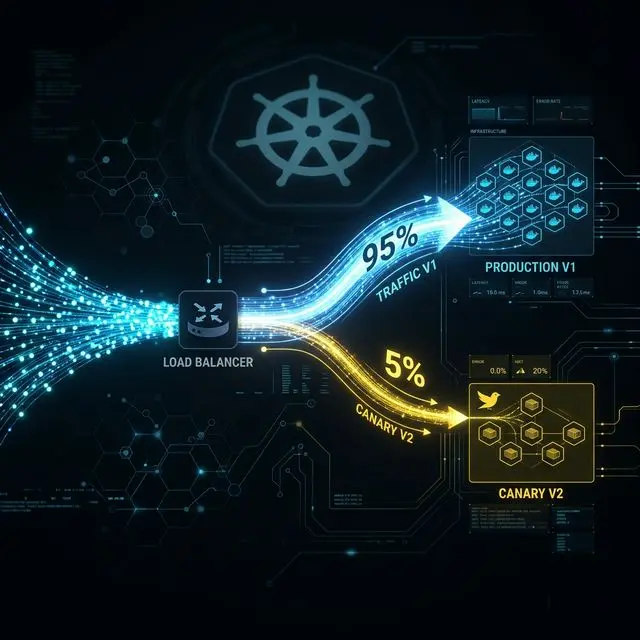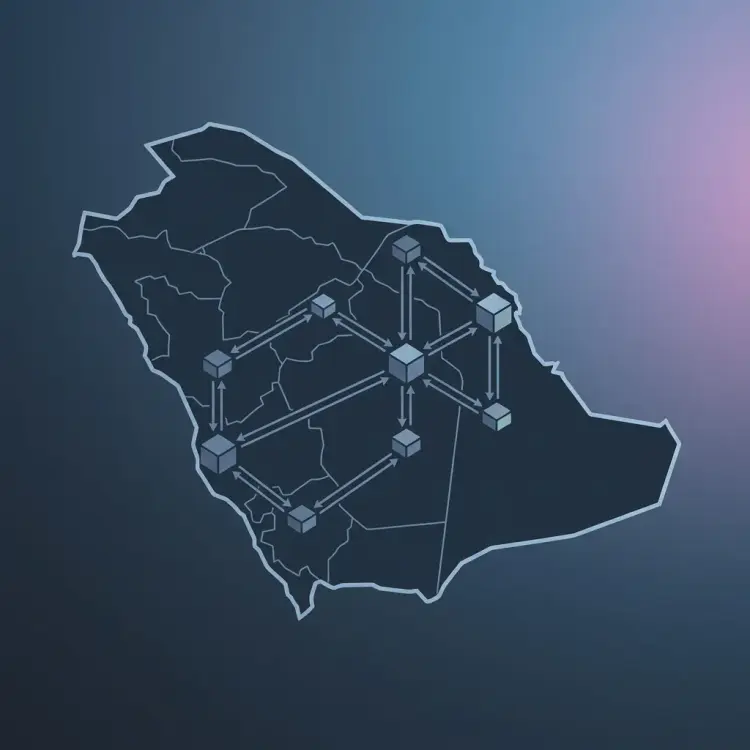

Designing a resilient b2b saas architecture saudi arabia platform necessitates a solid strategy for database isolation. When scaling on Kubernetes, balancing compute costs with tenant data isolation is a critical architectural decision for SaaS CTOs. Learn how progressive delivery keeps zero downtime releases safe in our canary environments guide, or partner with our senior team for specialized DevOps & Cloud Services.
In high-concurrency SaaS applications, a single un-isolated database query can leak tenant data. Ensuring isolation at the database layer is critical. This guide compares pooled, siloed, and hybrid database models and explains how to implement Row-Level Security (RLS) and namespace isolation. To modernise your frontend alongside your backend, read our guide on transitioning from monolith to micro-frontends.
1. The Multi-Tenancy Architecture Challenge on Kubernetes
Kubernetes excels at scaling stateless workloads. However, managing multi-tenant database access requires careful planning to prevent data leakage between tenants while keeping compute costs manageable.
When running a multi-tenant platform, the application server acts as a shared execution environment. If a query is executed without filtering by tenant ID, or if an application bug exposes another tenant's session, data leakage occurs. Building safety nets at the database and network layers ensures isolation even if the application code contains errors.
2. Silo, Pool, and Bridge Database Isolation Models
SaaS architects must select from three database isolation models, depending on target customer requirements, compliance limits, and infrastructure budgets:
The Silo Model (Isolated Databases): Every tenant is provisioned with a completely separate database server or schema. This offers the highest isolation and allows for tenant-specific encryption keys. However, it is the most expensive model and complicates database migrations, requiring coordinated schema updates across hundreds of separate databases.
The Pool Model (Shared Database): All tenants share the same database tables, with a tenant_id column separating records. This is highly cost-effective and simplifies migrations, but requires robust application-level checks to prevent cross-tenant access.
The Bridge Model (Hybrid Isolation): Tenants share a database server but are separated into distinct database schemas. This balances cost and isolation, allowing for separate access credentials while sharing underlying database hardware.
3. Enforcing PostgreSQL Row-Level Security (RLS) in Pooled Schemas
For pooled models, implement database-level Row-Level Security (RLS). By defining policies directly on tables, the database engine enforces tenant separation, ensuring Tenant A's queries can never access Tenant B's data even if there is an application bug.
PostgreSQL RLS works by evaluating a security policy for every SQL query. Instead of relying on developers to append WHERE tenant_id = 'X' to every query, the database engine injects this constraint automatically based on session variables set during connection initialization.
4. SQL Blueprint: Implementing PostgreSQL RLS and Session Variables
To implement RLS, you must enable the feature on your tables and define the access policies. This configuration ensures the database enforces isolation at the query engine level.
Below is a SQL script that creates a multi-tenant table, enables RLS, and configures a security policy that filters records based on a session variable set by the application database driver:
-- Create a multi-tenant schema table
CREATE TABLE client_vaults (
    vault_id UUID PRIMARY KEY DEFAULT gen_random_uuid(),
    tenant_id VARCHAR(50) NOT NULL,
    vault_name VARCHAR(255) NOT NULL,
    secret_payload TEXT NOT NULL,
    updated_at TIMESTAMP DEFAULT CURRENT_TIMESTAMP
);

-- Enable Row-Level Security on the table
ALTER TABLE client_vaults ENABLE ROW LEVEL SECURITY;

-- Create a policy requiring tenant_id match the session variable
CREATE POLICY tenant_isolation_policy ON client_vaults
    FOR ALL
    USING (tenant_id = current_setting('app.current_tenant_id', true));

-- Demonstration: Simulating a connection from Tenant A
SET LOCAL app.current_tenant_id = 'tenant-abc-1122';

-- This insert will succeed and be tagged with Tenant A's ID
INSERT INTO client_vaults (tenant_id, vault_name, secret_payload)
VALUES ('tenant-abc-1122', 'Core Finances', 'Encrypted Financial Ledger');

-- Attempting to read data. The query returns only Tenant A's records.
SELECT * FROM client_vaults;

-- Attempting to query as Tenant B
SET LOCAL app.current_tenant_id = 'tenant-xyz-9988';
-- This returns 0 records, preventing access to Tenant A's data
SELECT * FROM client_vaults;
5. Preventing Connection Exhaustion with PgBouncer Connection Pooling
As you scale to thousands of tenants, your application pods will open numerous database connections. PostgreSQL allocates memory for each connection, which can exhaust resources under high traffic.
Deploy a connection pooler like **PgBouncer** in front of your PostgreSQL cluster. PgBouncer routes database requests through a pool of active connections, preventing connection exhaustion and keeping database memory usage stable.
6. Kubernetes Isolation: Namespace Enforcement & Network Policies
At the orchestration layer, use Kubernetes namespaces to isolate tenant resources. Set up resource quotas, network policies, and isolated ingress routes to prevent tenants from accessing each other's networks or consuming all cluster resources.
By default, Kubernetes allows any pod to communicate with any other pod in the cluster, which is a compliance risk. You must configure Network Policies to block cross-namespace traffic, ensuring pods in Tenant A's namespace cannot communicate with pods in Tenant B's namespace.
7. Kubernetes Manifest: Restricting Cross-Namespace Traffic
Isolating tenant workloads requires configuring network boundaries at the cluster container network interface (CNI) layer.
Below is a Kubernetes NetworkPolicy manifest that isolates pods within a tenant's namespace, blocking all incoming traffic from other namespaces while allowing connection to database subnets:
apiVersion: networking.k8s.io/v1
kind: NetworkPolicy
metadata:
  name: isolate-tenant-namespace
  namespace: tenant-abc-1122
spec:
  podSelector: {} # Selects all pods within this namespace
  policyTypes:
  - Ingress
  - Egress
  ingress:
  - from:
    - podSelector: {} # Allow traffic only from pods in the same namespace
  egress:
  - to:
    - podSelector: {} # Allow outgoing traffic only to pods in this namespace
  # Allow egress to external databases inside the private VPC subnet
  - to:
    - ipBlock:
        cidr: 10.100.3.0/24 # DB Subnet block CIDR
8. Conclusion: Designing for Scalable Tenancy
Choosing a database isolation strategy requires balancing cost with isolation requirements. Implementing database-level RLS and Kubernetes namespaces ensures a secure, scalable SaaS architecture.
A multi-layered isolation approach allows your organization to deploy multi-tenant applications that scale efficiently while maintaining compliance.
At Bytevault, we help technology leaders design and implement SAMA-compliant b2b saas architecture saudi arabia solutions, ensuring your infrastructure is built for growth in the Middle East.