

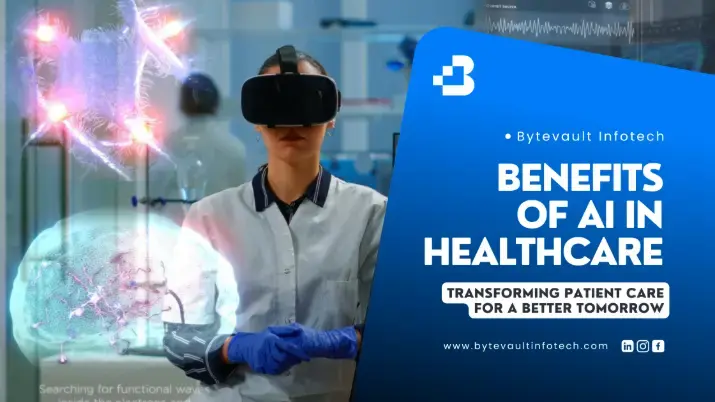
Introduction: Artificial Intelligence (AI) is transforming healthcare by enhancing patient outcomes, improving efficiency, and driving innovation. As healthcare systems continue to evolve, AI technologies like machine learning, natural language processing, and predictive analytics are offering solutions to long-standing challenges, from diagnosing diseases to streamlining hospital operations. In this blog, we'll explore the transformative benefits AI brings to the healthcare sector.
Enhanced Diagnostic Accuracy
One of the most significant contributions of AI in healthcare is in diagnostics. AI algorithms, especially those based on machine learning, can analyze vast amounts of medical data and detect patterns that may elude even the most experienced medical professionals.
-
Automated Image Analysis: AI-powered imaging tools help radiologists interpret medical images, such as X-rays, MRIs, and CT scans, with increased accuracy. This reduces human error, leading to earlier and more accurate diagnosis.
-
Predictive Analytics: AI models can predict disease risk based on patient history and genetic information, allowing for preemptive treatment.
Personalized Patient Care
AI-driven solutions are enabling highly personalized treatment plans that are tailored to each patient’s unique health profile. By analyzing genetic information, lifestyle data, and clinical history, AI can suggest treatment options that are likely to be most effective for individual patients.
-
Precision Medicine: With the help of AI, healthcare providers can develop precision medicine approaches that improve patient outcomes and reduce side effects.
-
Continuous Monitoring: AI-powered wearable devices continuously monitor patients, alerting healthcare providers to any unusual readings. This real-time data enables prompt intervention, especially for chronic disease patients.
Optimized Operational Efficiency
For healthcare providers, operational efficiency is a priority. AI can streamline administrative tasks, allowing medical staff to focus on patient care.
-
Automated Scheduling: AI systems optimize appointment scheduling by predicting patient no-shows and adjusting schedules to ensure maximum utilization.
-
Efficient Resource Management: AI models can predict peak times for patient visits, enabling better resource allocation and minimizing waiting times.
Improved Drug Development and Clinical Trials
The traditional drug discovery process is costly and time-consuming. AI accelerates drug discovery and clinical trials by analyzing complex data, identifying potential drug candidates, and predicting outcomes.
-
Drug Discovery Acceleration: AI algorithms rapidly analyze chemical compounds and simulate interactions, reducing the time needed to develop new drugs.
-
Patient Recruitment for Trials: AI systems identify suitable candidates for clinical trials, ensuring faster recruitment and reducing dropout rates.
Reducing Costs in Healthcare
By improving diagnostic accuracy, operational efficiency, and treatment precision, AI can reduce overall healthcare costs. This benefit is particularly attractive to healthcare systems and patients in Europe and the Middle East, where efficient healthcare solutions are in demand.
-
Cost-Effective Diagnosis and Treatment: Early detection and personalized treatments lower the need for costly interventions.
-
Automated Billing: AI can handle billing and insurance claims, reducing administrative costs and improving billing accuracy.
Telemedicine and Virtual Health Assistants
Telemedicine, powered by AI, is bridging the gap between healthcare providers and patients in remote areas. AI-enabled virtual health assistants offer around-the-clock support, answering patients' questions and scheduling appointments.
-
Remote Patient Monitoring: AI tracks health metrics and alerts providers to any concerns, reducing hospital visits and costs.
-
Virtual Health Support: Virtual assistants provide basic health guidance, enhancing patient engagement and adherence to treatment.
Conclusion: Why Healthcare Providers Should Embrace AI
AI is no longer a futuristic concept, it’s an essential tool for the modern healthcare landscape. From improving patient care to optimizing operations, AI brings undeniable advantages. As technology continues to evolve, its potential to transform healthcare is limitless.